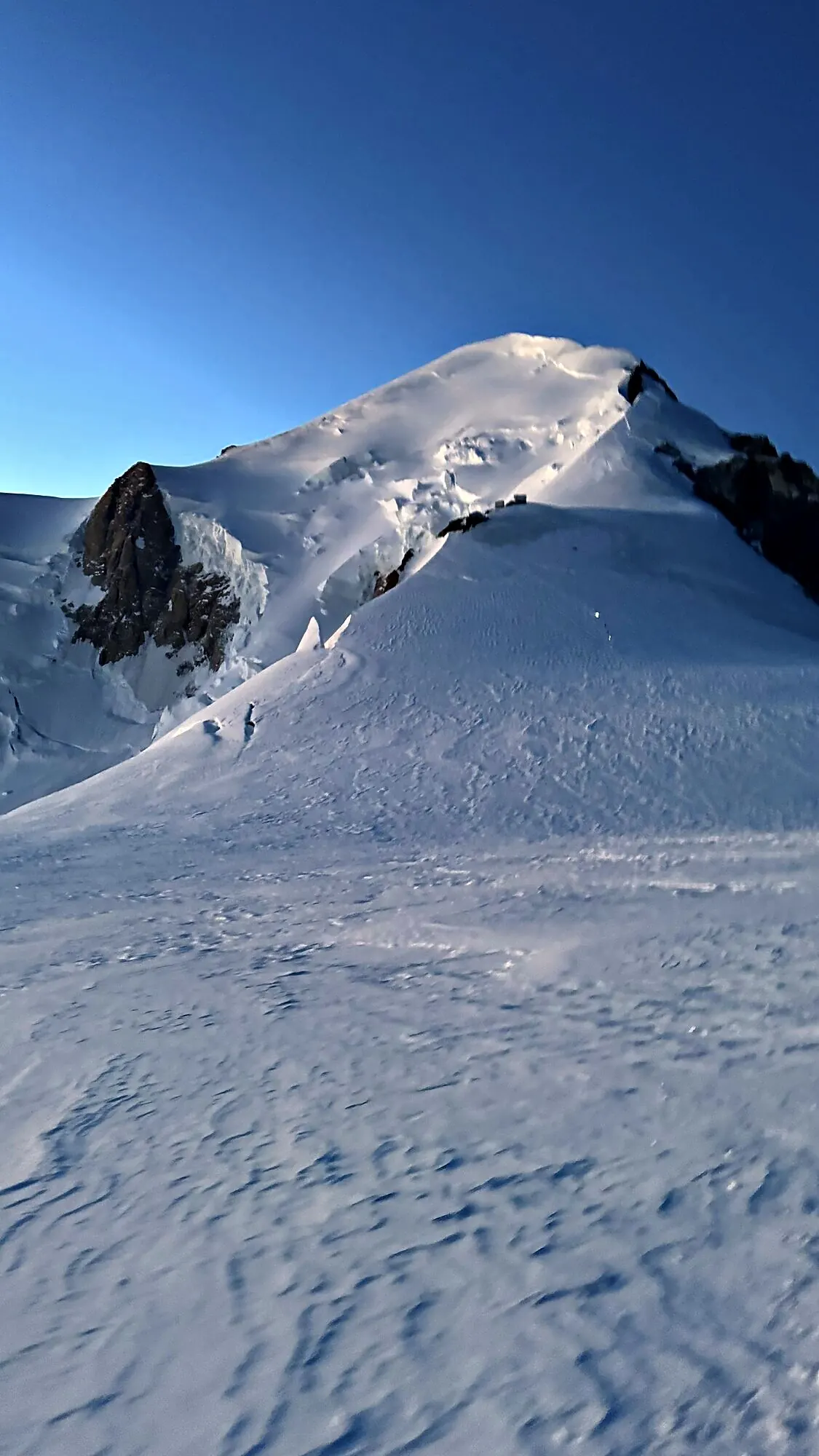
In short
- The Goûter route is the most popular and technically simplest of the classic routes on Mont Blanc (about 4,807 m). Simplest does not mean easy.
- You need fitness, basic glacier skills, acclimatisation, tested gear, hut bookings and insurance that covers high mountains.
- Our climb: six days in the mountains, 41.3 km and about 5,080 m of ascent, acclimatisation on Gran Paradiso, two nights at the Goûter.
- The huts alone cost us about €496 per person.
First, honestly: what Mont Blanc is
Mont Blanc is easy to misjudge from a distance. It is the highest peak in the Alps and sounds serious, while the normal route via the Goûter is sometimes described as just a long walk. In practice it is neither. Technically it is not the hardest mountain in the world, but it is high. Altitude, weather, wind, cold, crevasses, fatigue, acclimatisation and decisions made as a team all matter.
I am not a mountain guide. I went through the whole process with my team: from the idea, finding people, bookings and organisational mistakes, to the summit and the descent to the valley. This text is not a topo and does not replace a glacier course, a guide or current reports. Prices, lift timetables and booking rules need to be checked again before your trip.
Which route to take
Several classic routes lead to the top of Mont Blanc. The most popular is the Goûter route: the most logical in terms of logistics and the simplest technically. It still has altitude, a glacier, the Bosses ridge, a long summit day and the Grand Couloir, where the main problem is rockfall.
The 3M route from the Aiguille du Midi over Mont Blanc du Tacul and Mont Maudit is more glaciated and more technical, with a night approach through terrain exposed to serac fall. The historic Grands Mulets route depends heavily on glacier conditions. The Italian route via the Gonella hut and the Aiguilles Grises is longer and less obvious logistically if you start from Chamonix. For an independent team on a first Mont Blanc, the Goûter was the most sensible compromise, and it is the route I describe.
When to go
The date depends on the huts, transport, snow conditions and the weather, not just on your holiday. June can be more wintry and less crowded, but not everything may be running on its full summer schedule yet. In our case the Tramway du Mont-Blanc was not yet running to Nid d’Aigle, so we walked further from the Bellevue gondola. July and August bring full infrastructure, but also more pressure on bookings and more people. September can bring more stable conditions, with shorter days.
I would not plan the climb around one fixed day as the only chance. The weather does not care about your calendar. If you can, keep a spare day. We did not have one, and we felt the pressure for the whole trip.
Six things to sort out before you go
Fitness. The ability to work steadily for a long time matters more than speed: many hours with a rucksack, short sleep in a hut, a night start and a descent when you are tired. I started with a treadmill set to an incline that imitated long climbs. Running fitness helps, but it does not replace walking in the mountains.
Skills. Crampons, ice axe, rope and moving as a roped team must not be new on the route. I did a glacier course before the trip. I would not put crampons on for the first time on summit day, and I would not learn to tie into the rope at three in the morning below the Goûter.
Acclimatisation. Your body should be tested high up before the summit push. We climbed Gran Paradiso (4,061 m) first. The options and the symptoms of altitude sickness are in the acclimatisation guide.
Gear. Things you need, that you have tested and know how to use. My rucksack weighed about 20 kg at the start, and that was a mistake. What worked and what was too much is in the gear guide.
Bookings and logistics. The Tête Rousse and Goûter huts are booked well in advance, and they set the whole plan. The booking order, deposits and balances paid on site are in the guide on booking the huts, and the cost of the whole trip in how much Mont Blanc costs.
Insurance and paperwork. “Some policy” is not enough. Check whether it covers high mountains, glacier travel, rescue and medical transport, up to what altitude it applies and what it excludes. The European Health Insurance Card (EHIC) is useful, but it is not mountain insurance. We used the Alpenverein.
What the Goûter route looks like
From Les Houches we took the gondola to Bellevue and continued on foot along the Tramway du Mont-Blanc tracks, through the Nid d’Aigle area to the Tête Rousse hut. The next day we crossed the Grand Couloir. Rocks fall there mostly once the sun starts warming the slope, so it is best crossed early. Higher up are the rocks of the Aiguille du Goûter with steel cables, but this is not a tourist via ferrata. It is high mountain terrain, with a rucksack and exposure.
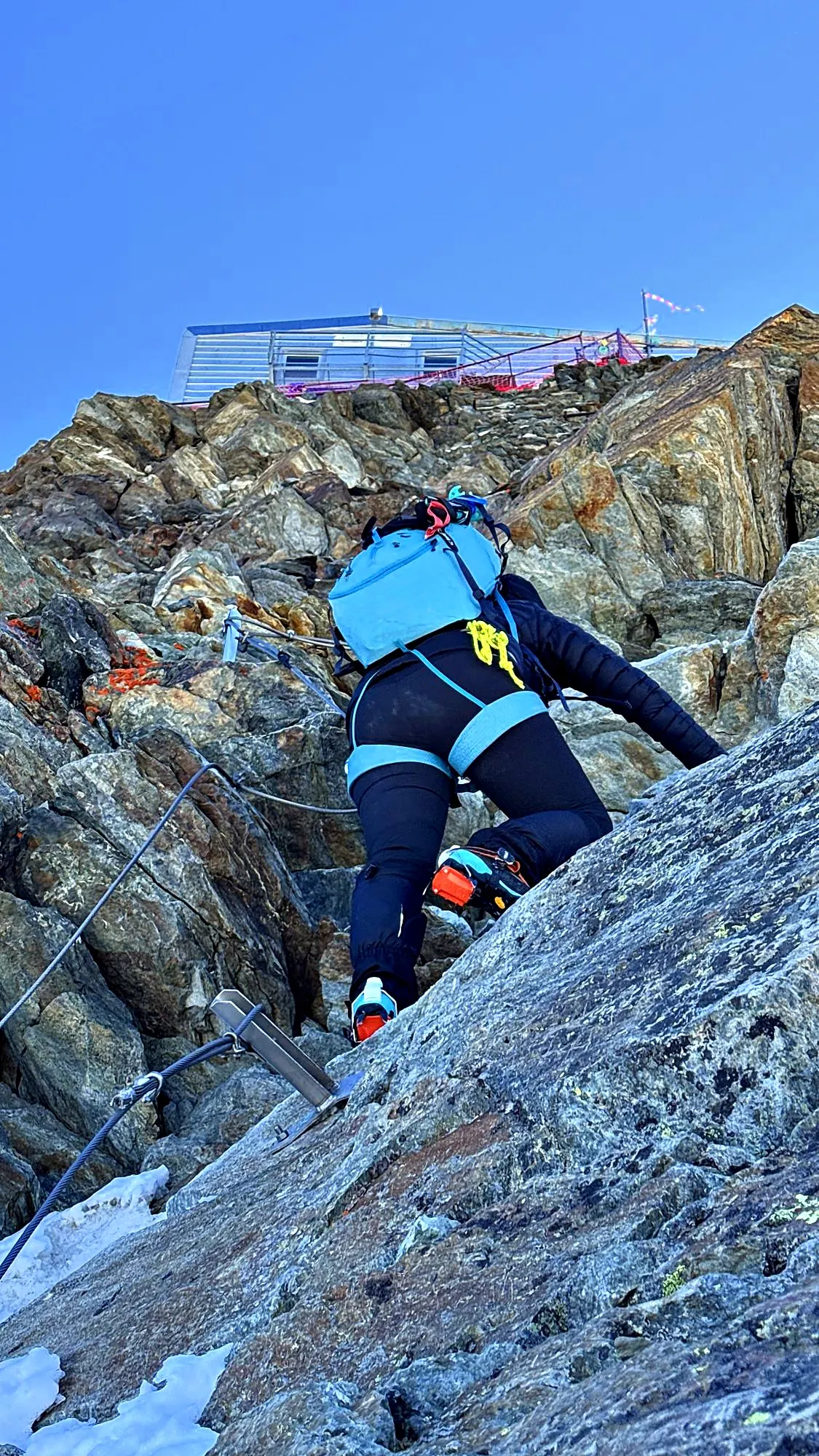
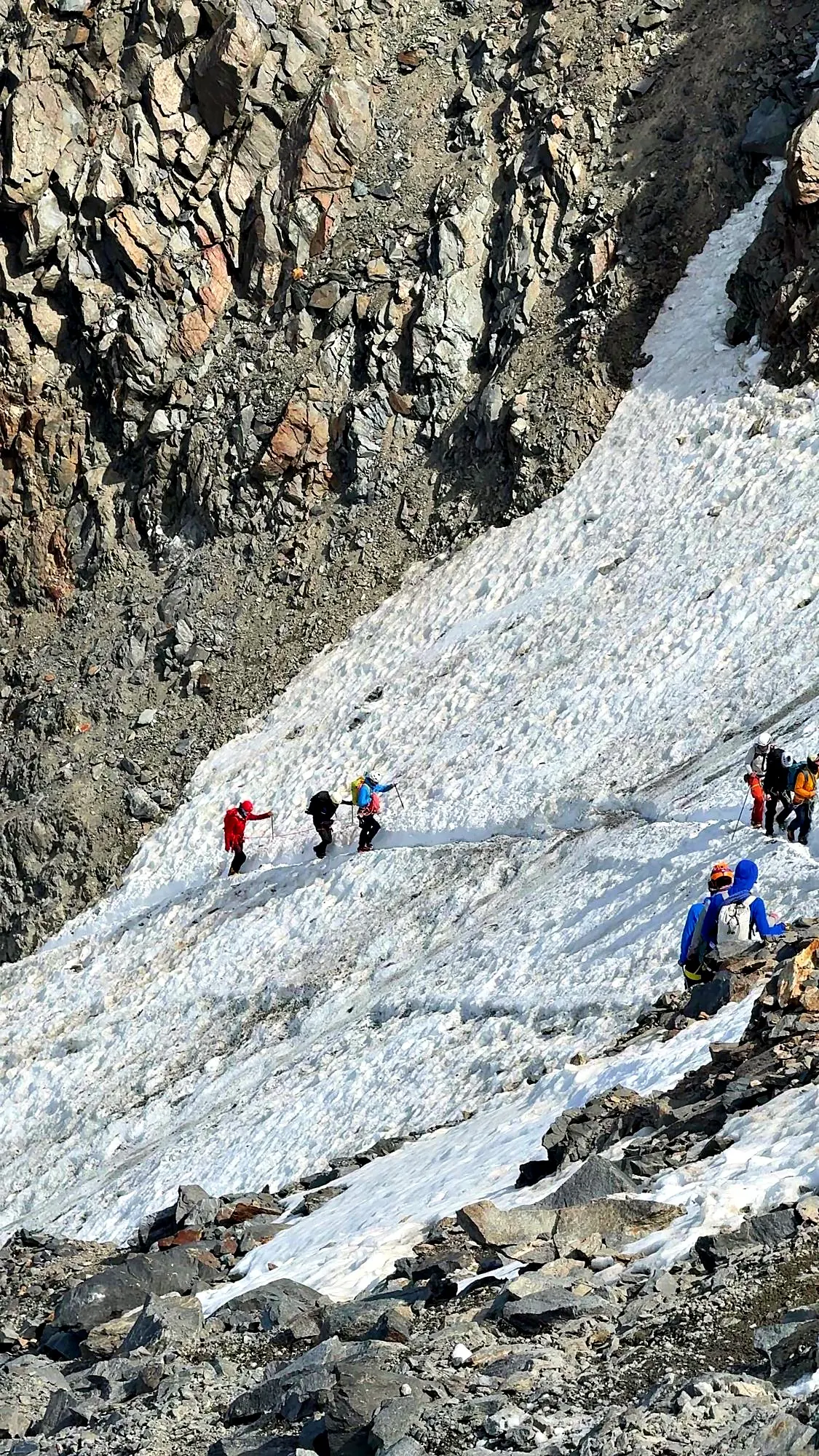
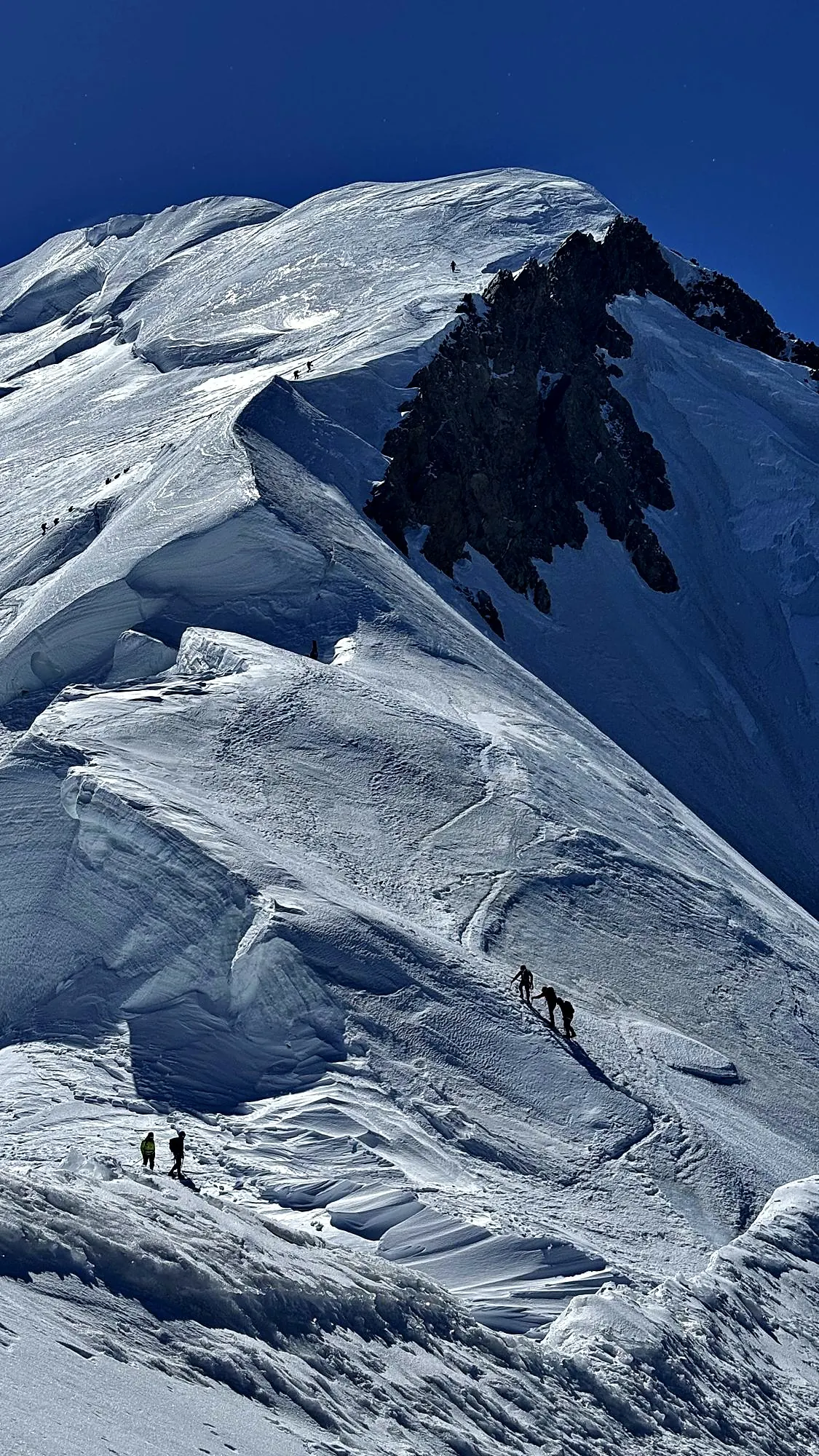
Summit day starts at the Goûter: breakfast at about 2:00, a start in the dark, in crampons and with head torches. Then the climb to the Vallot, the Bosses ridge and the summit. Nothing ends at the top, because you still have to get back to the Goûter, and the next day descend through the Grand Couloir to the valley. The descent is not a formality. The second night at the Goûter let us return to the hut after the summit instead of going all the way down the same day. Times and GPS data for each day are in the day-by-day account.
When to turn back
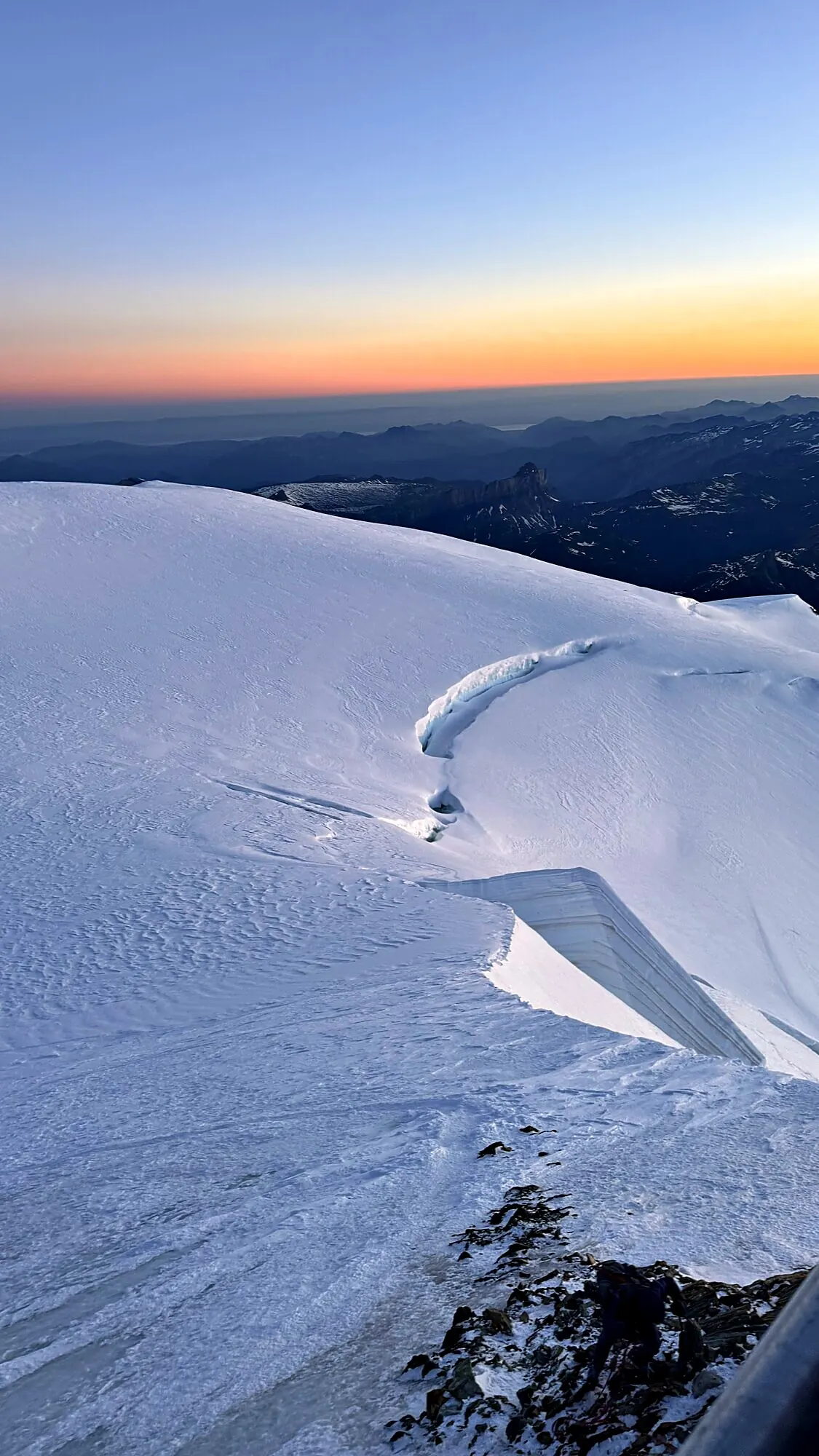
At the Vallot it was cold and windy, and many teams were waiting or turning back. The decision to go on belongs to the team and the conditions, not to the booking or the planned summit photo. The most common mistakes from our trip and how to prepare a plan B are in the guide on mistakes.
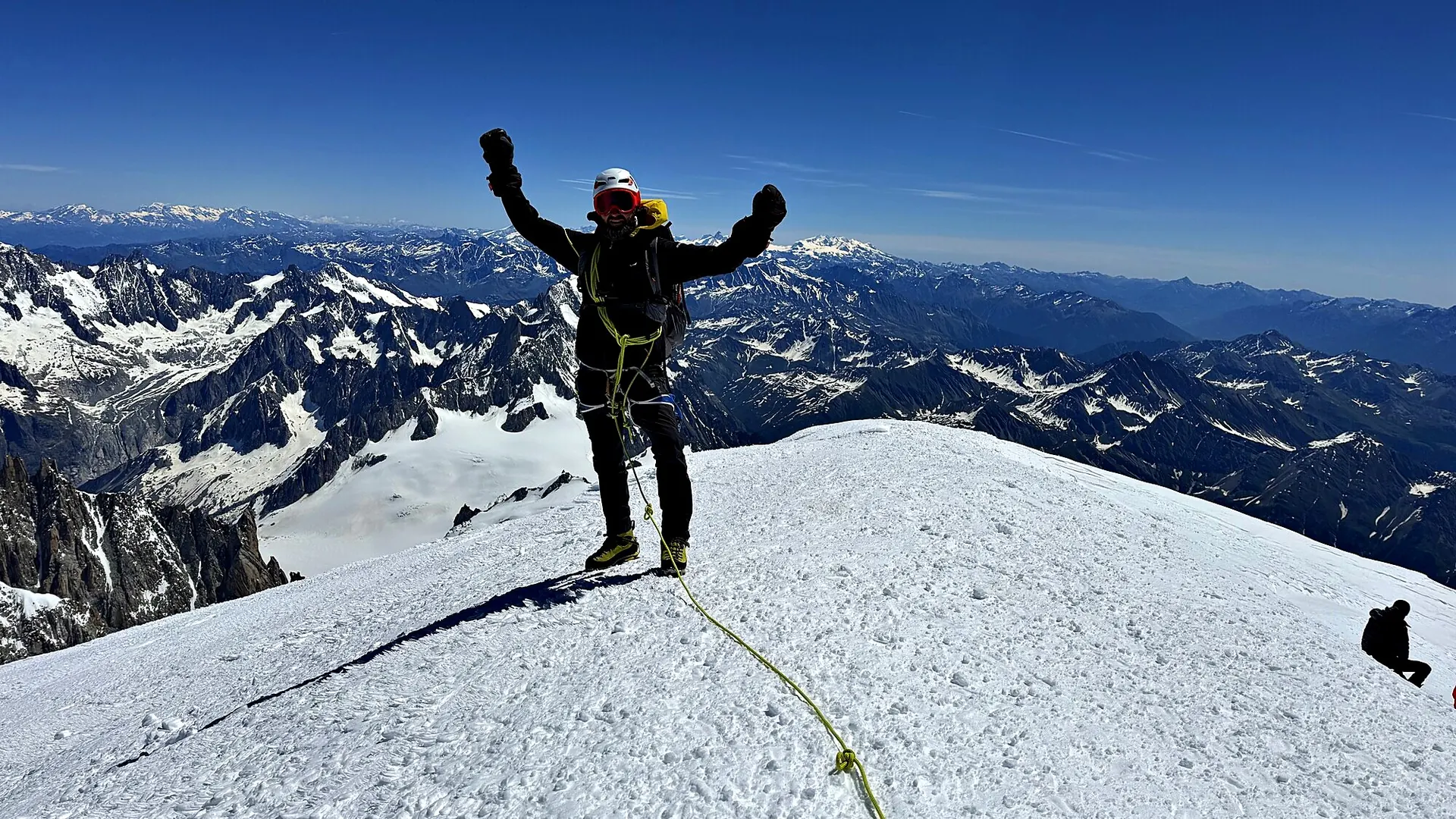
The summit is the goal. But a safe return matters more.
If someone prepares their trip better and then turns back in bad conditions, I will consider that this text has done its job.